

Per ardua, ad astra…
Our journey from myth and dreams to the stars...

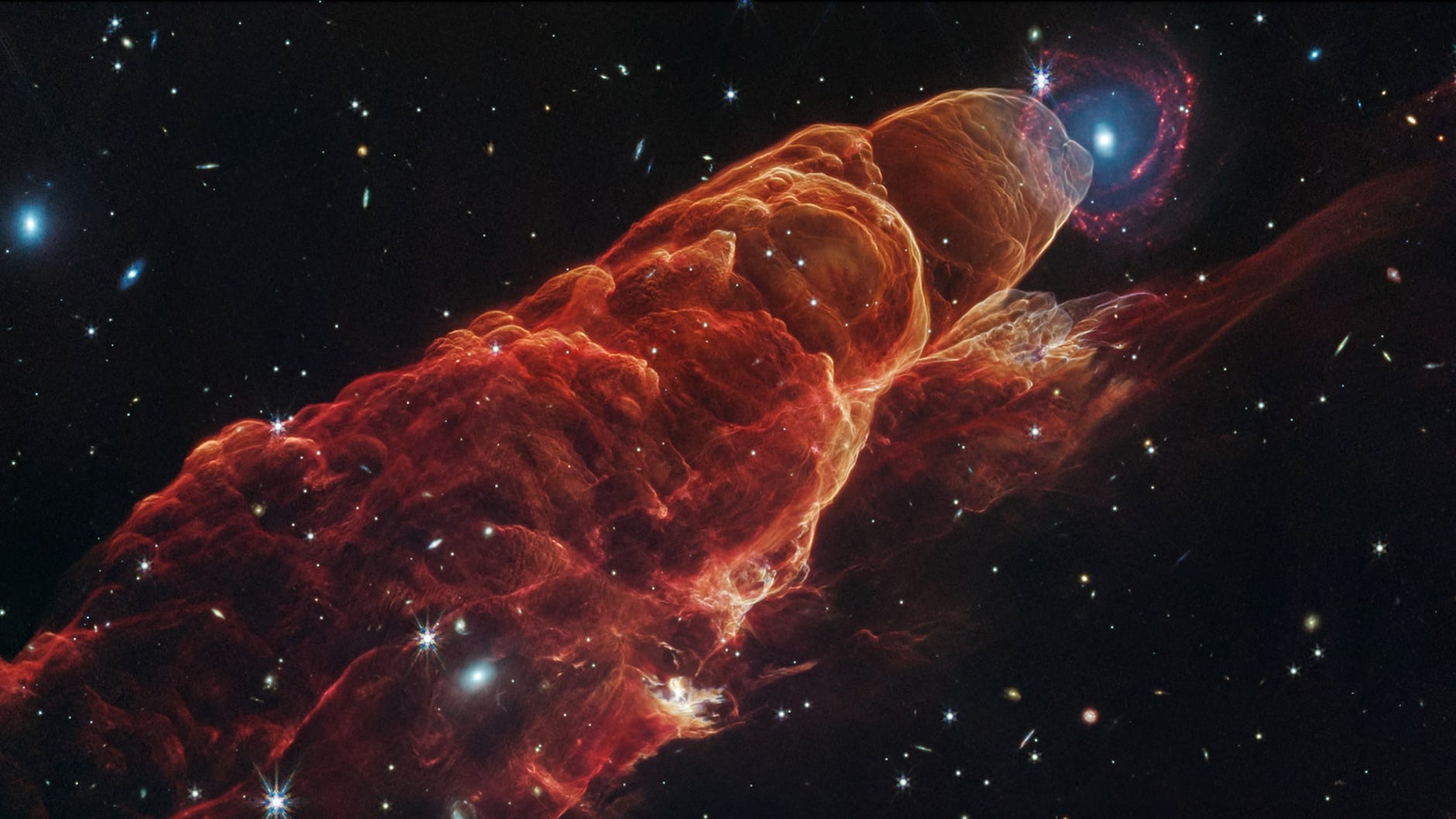
Humanity has a long history of aspiring to reach the stars. It is a narrative of progressive conceptual expansion, moving from the localised horizons of our ancestors and their sometimes limited spiritual cosmography out to the relativistic, multi-dimensional cosmos described by modern theoretical physics.
This trajectory not only reflects our technological evolution, but also a fundamental shift in how we perceive our relationship with the universe. Everything that was ‘out there’ and hence unattainable to our ancestors has been like a series of fences that have fallen, one by one, before our understanding and technological power. We have always yearned to grasp what is just out of reach, over the next hill or just over the horizon, but in ancient times the celestial world seemed far away indeed. It was a realm that we could see above us but always only accessible to beings with greater powers than ourselves, the divine Gods and their chosen messengers. Nevertheless, there were dreamers who thought to oppose the idea that crossing that gulf was impossible, or even forbidden by God.
The early belief in a celestial sphere, accessible only through accident or divine favour has been replaced now by a rigorous understanding of a cosmos dominated by the speed of light, denoted by the letter: ‘C’. This now has become the defining barrier to our expansion beyond our localised realm (the nearby planets). ‘C’ is a much harsher mistress than we have faced before, more inflexible than any God and something that cannot be persuaded by any means we now possess.
Even reaching destinations on the edge of our solar system is a formidable challenge; it took our Voyager probes (launched in the 1970s) over 40 years to reach what we describe as the ‘edge’ of the solar system. The journey takes light itself about 18 hours, which is longer than you might think! How much further are the stars… the numbers become mind-boggling!
Consequently, our cultural and scientific response to this barrier has given rise to many and various concepts of breaking it and opening up the universe beyond to our travels - FTL, or faster-than-light travel - serving as a bridge between the limitations of current physics and our persistent drive for discovery.
The Spiritual Mechanics of Flying.
In the pre-modern world, the sky (and space) was not perceived as a vacuum but as a structured realm, often inhabited by deities and governed by laws distinct from those of the terrestrial plane. By later medieval times, it had become a realm populated by considerable detail: crystal spheres that supported the rotation of the planets and held up the dome of the stars. In between these levels, beings such as angels wandered freely, but also demons and the occasional visitors such as comets, which were regarded as messengers bringing signs and omens to be observed by those below. This was the time of the Geocentric system of Ptolemy, where everything rotated around the Earth and, of course, man. Beyond the highest levels of this structured universe was heaven and God itself, and only the most favoured of humans were allowed entry into this realm while still alive. Dante’s ‘Divine Comedy’ (Inferno, Purgatorio and Paradiso) explored and described this universe in all its detail. It is a world of levels, where nature is ordered into a hierarchy of merit witnessed by Dante, guided by the Roman poet, Virgil.
But it didn’t stop humans speculating and devising ways of accomplishing incursions into the divine world.
Some very ancient oral myths of the S. African bushmen preserve the idea that the stars were celestial campfires, tended by beings who lived in the sky (1). Such a view is quite consistent with the world they inhabited, and similar views were probably held across the world in the age of hunter-gatherers. With the advent of technology, cities, and agriculture, our ideas started to become more sophisticated. In the legend of Daedalus from Crete, a machine is built, a huge pair of brazen wings that can carry a human aloft. Its inventor, Daedalus, warns that it should not be flown too high as the sun might melt the wax holding its feathers in place, but needless to say, Icarus - the perennial adventurer - ignores this, flies too close to the sun, and plummets to his death (2). These tales of failure served as a warning (amongst many) not to dare straying out of one’s own lane and into the domain of the Gods. But, thankfully, human nature being what it is, it was ignored.

The earliest accounts of celestial travel did not distinguish between the atmospheric and the interplanetary, viewing the stars and the Moon as destinations within a single, continuous void of air accessible to creatures such as birds. Humans marvelled at the ability of birds to fly and attempted to emulate their feat many times, in actuality as well as in story. But in the Sanskrit literature of ancient India, particularly the Vedas, the Ramayana, and the Mahabharata, there exist references to manufactured flying machines, known as ‘Vimanas.’ These vehicles were described as the transport of the Gods, mythological flying palaces or self-moving chariots capable of traversing both the Earth’s atmosphere and the deeper reaches of the heavens. Some texts categorise ‘Vimanas’ into various classes based on their range and mechanical sophistication. Some were for local travel, while others were intended for voyages to various ‘systems’ or ‘worlds’ known as Lokas (3). The subject has become muddied and confused, however, by association with UFO mythology and conspiracy theories, which always over-interpret. Original sources have become confused with later Sanskrit texts from the 19th century and by the difficulties of interpreting descriptions translated from another language, where the terms used may not reflect the exact meaning of the originals. Nevertheless, it does not change the fact that ancient Indian culture viewed the heavens as a realm that could be traversed.
Keep reading with a 7-day free trial
Subscribe to The Turbulent Mirror to keep reading this post and get 7 days of free access to the full post archives.