

The Book Node... #5
SOMNIUM (The Dream) - Johannes Kepler, D.K. Narciedies, et al, 1634 (Kindle Edition)

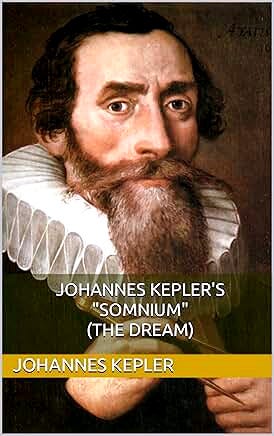
I decided to review a strange book this issue, as it is so old and obscure, so I hope you’ll find it interesting! It is simply called ‘Somnium’ (The Dream), written by the astronomer Johannes Kepler in 1608, and it is regarded as the first true work of science fiction.
It is quite a simple tale told in a style popular in the ancient world, where the hero needs to travel to strange places; that of the dream journey!
Mostly, we expect books from this time to be impenetrable in their convoluted prose and thus difficult for us to read. However, there are quite a few good translations into English available that aren’t overly wordy, so I got mine from the Kindle store to read on my Scribe.
Somnium was originally written in Latin, of course, and the text is surprisingly short, less than a 20-minute read, in fact, which was a surprise. Indeed, the footnotes to the text that Kepler wrote to explain it are quite a bit longer than the text of the story.
Although fanciful stories in which heroes visit other imaginary worlds were known before Kepler’s time (such as Lucian’s Ἀληθῆ διηγήματα - ‘A true story’), what makes Kepler’s different is what actually makes it science fiction and not just a mythical tale.
‘The Dream’ is exactly that, where the hero, Duracotus, falls asleep after observing the stars. However, it is not any dream, but one that is brought about by means of an occult ritual. In the dream, he is taken to the realm of ‘Levantia’ - the Moon, and describes it and its inhabitants. The method of getting to the Moon is ordinary enough and clearly not important to the plot; he is shot up there by a ‘water spout.’ However, Kepler’s descriptions of what happens to the travellers as they traverse the space on their way to the Moon contain many accurate observations. Things such as the feeling of acceleration, the bitter cold of space, and the difficulty breathing are all there, as well as the ‘pull’ the Moon exerts on them as they get close, causing them to fall quicker and having to protect themselves from crashing on its surface.
Keep reading with a 7-day free trial
Subscribe to The Turbulent Mirror to keep reading this post and get 7 days of free access to the full post archives.