

The Turbulent Mirror - #5
A monthly substack about Science, Art, the Spiritual, Classical Antiquity, Retro SciFi and any other fluff that comes into my head!


Hello, it’s that time again!
I did a bit better this month with posting things in a more timely fashion, so this email is a round-up of things you might have already seen and the new stuff I posted last minute (as usual). I made one of the stories free this time, so please enjoy it!
The theme I chose this time is ‘Faster than Light,’ celebrating science fiction’s dreams of visiting the stars. Like many who grew up watching Dr. Who, Star Trek, Blake’s Seven, and reading 2000AD (here in the UK anyway), it’s always been something I’ve longed to see in my lifetime. That probably won’t happen, of course, but there are signs that some of the ideas long explored in SF books and films might have some reality in physics after all! I find that very exciting, and as a long-time nerd and fan of science, I’ve learned as much as I can about those developments. It inspired me to write this month’s article tracing our interstellar ambitions from the ancient to the modern.
Perhaps ideas like these are especially attractive now as they distract us from the troubled times we live in. Things I learned of at school and thought were in the past have loomed up to confront us again. I just hope we can hang on and find a way to get past the ‘great filter.’ That is something I’ll write about another day - meanwhile, enjoy every day that comes along!
WK Oxford May 2026
In this month’s Turbulent Lens:
Main Article: Per ardua as Astra - The Human obsession with reaching the stars.
May’s cartoon - dictated by our trusty Ai Hack, and executed for your entertainment by yours truly!
A new piece of sci-fi art.
Part IV of the story ‘No Honour amongst Thieves.’
Book review: Somnium - by Johannes Kepler, one of the world’s first SF stories.
New poetry - my attempt to write a funny limerick about relativity.
‘The Wine Dark Deep’ - a free sci-fi story that deals with how belief reacts when confronted by reality.
Art
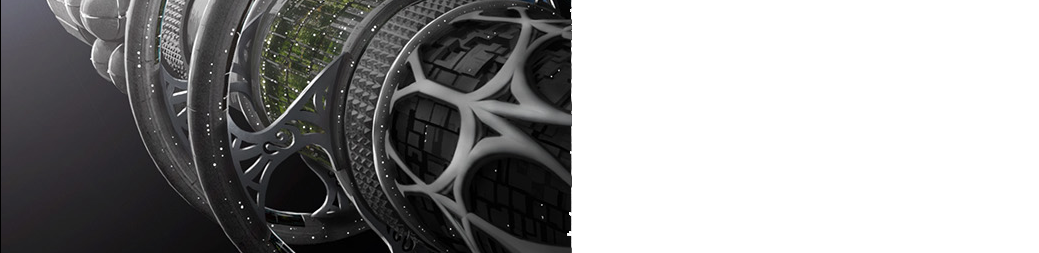
Art & Illustration # 5: ‘Gateway’
‘Gateway,’ Digital mixed media, © W.Kinghan 2026.
Articles
Article: Per Ardua ad Astra
Our journey from myth and dreams to the stars...

Humanity has a long history of aspiring to reach the stars. It is a narrative of progressive conceptual expansion, moving from the localised horizons of our ancestors and their sometimes limited spiritual cosmography out to the relativistic, multi-dimensional cosmos described by modern theoretical physics.
This trajectory not only reflects our technological evolution, but also a fundamental shift in how we perceive our relationship with the universe. Everything that was ‘out there’ and hence unattainable to our ancestors has been like a series of fences that have fallen, one by one, before our understanding and technological power. We have always yearned to grasp what is just out of reach, over the next hill or just over the horizon, but in ancient times the celestial world seemed far away indeed. It was a realm that we could see above us but always only accessible to beings with greater powers than ourselves, the divine Gods and their chosen messengers. Nevertheless, there were dreamers who thought to oppose the idea that crossing that gulf was impossible, or even forbidden by God.
Humour
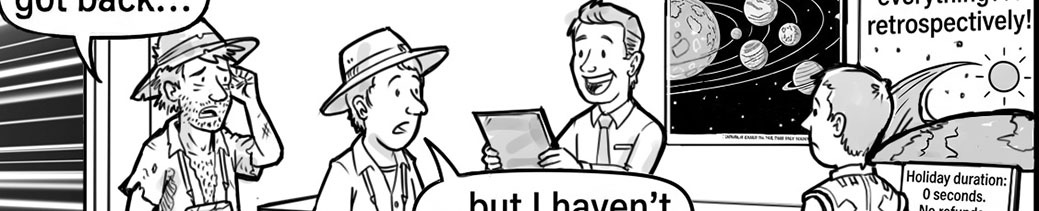
The mostly regular Robo-Hack #5
Ai Hack gives it’s view on humanities aspirations…
Review
The Book Node… #5
Somnium (The Dream) by Johannes Kepler, D.K. Narciedies, et al, 1634 (Kindle Edition)

I decided to review a strange book this issue, as it is so old and obscure, so I hope you’ll find it interesting! It is simply called ‘Somnium’ (The Dream), written by the astronomer Johannes Kepler in 1608, and it is regarded as the first true work of science fiction.
Poetry

The Sibyl’s Upload #4: A Transluminal Limerick
Poems by myself and other contributors that are probably off-theme most of the time!
Fiction
No Honour among Thieves - Part IV

Aretē tries to rescue Veretē, and bites off more than they can chew…
The ‘Villa Mysteriorum’ was extensive and opulent. Veretē’s family were obviously rich praetorians and important people. It lay in the residential area of segment 4, which was itself quite exclusive. Here, many of the political class lived in surface buildings, part of the vast inner surface of Prism. It was in contrast to the countless levels below the superstructure, the underground city where most of Prism’s one billion people lived. There were vast complexes of apartments served by underground facilities in every zone. These were by no means poor or tenement housing; the Alliance gave all citizens basic housing and an income, along with perpetual healthcare and other benefits, which were part of their citizenship. Except for people like Aretē, of course. The civilisation was automated; menial tasks were done by robots, systems run by artificial intelligences. Humans took the role of administrators, caretakers, and supervisors, ensuring that the system worked for the interests of civilisation, not against it. Humans were rather encouraged to improve themselves through accomplishments in education, arts, and sport. This was the system of the ‘three pillars,’ a progression that earned points and honour, leading to advancement in society. Criminality deducted these points and eventually led to service, or in extreme cases, imprisonment in a penal colony.
The system was designed to be comfortable so that nobody had to strive simply to live. A happy population lessened resentment and led to cooperation, which was the bedrock of civilisation. It was a lesson the Romans had learned well, and the reason their empire had lasted for 1,000 years.
The Republic operated the same system, but in both nations, hereditary power and wealth distorted it. Aretē couldn’t be sure how Veretē’s family had achieved their status, but it must be high enough judging by the standard of this villa, a holiday home in a different nation.
True to form, Aretē had co-opted a pair of service robots from the superstructure, as they’d often done before. The ‘bots were still able to perform their assigned duties but, when summoned, would help Aretē with whatever was required, in this case: breaking and entering.
Fiction
The Wine Dark Deep

Jupiter filled the forward viewport like an impartial judge, contemplating the tense drama unfolding in its great orbit.
Commander Dani Meyer had seen it before - on screens and in simulations, in the photographs that had lined the walls of his childhood bedroom in Dusseldorf - but nothing in twenty years of spaceflight had prepared him for the actual sight of it: the bands of ochre, cream, and rust rotating with a slow and terrible patience, the storm systems large enough to swallow whole continents making their endless circuits in the upper atmosphere. It was, he had thought when they first approached four days ago, the face of something indifferent to human scales.
But he was not thinking about its beauty now.
“Nathan? Buddy…” He pressed his palm flat against the sealed door of the navigation control room and spoke into the intercom as calmly as he could manage. “I need you to listen to me.”
Gallery
Images…
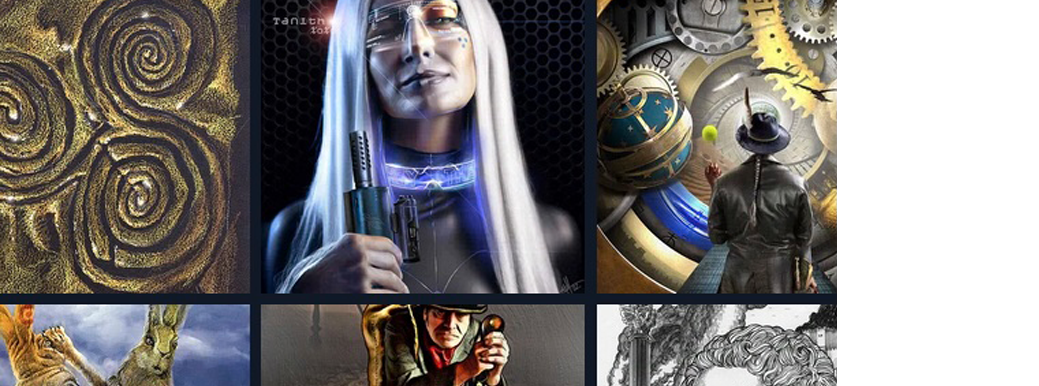
A selection of my artwork from the last few years.
That’s it for this issue. Thanks for reading, commenting or even liking! And thank you even more if you are a subscriber, as you support my work.